What it is
The warehouse, delivered whole
Forklifts, software, and charging come together as one system, not three separate projects.
Physical AI
Simple forklifts. One warehouse.
The fulfillment platform and warehouse AI are presented together. Connections are scoped to each operation; no live order-to-robot integration is implied.
Illustrative visualizationWhat it is
Forklifts, software, and charging come together as one system, not three separate projects.
Why it is different
AI links each pallet to where it belongs, chooses the forklift and the route, and gets better after every trip.
What you get
Fewer tasks assigned by hand, fewer empty trips, and more inventory in the warehouse you already run.
Two warehouse setups
Either the same trips repeat all day, or the building cannot store any more. Each setup is a complete system.
Forklift conveyor
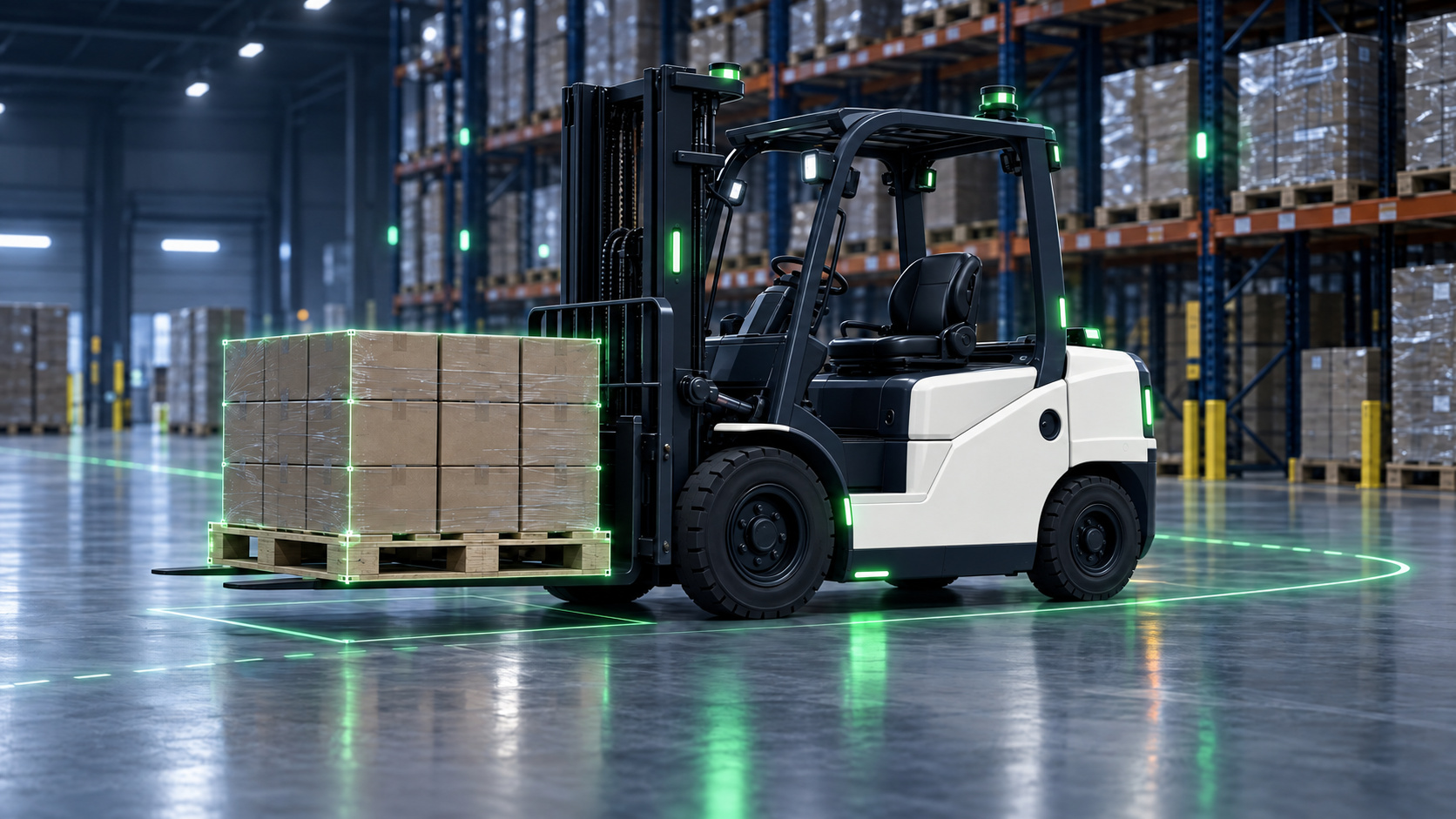
Set a pallet down. Warehouse.Plus reads the label, finds where it belongs, and sends a forklift. Nothing has to be bolted down, and nobody picks a start and an end for every trip.
People step in only when something is wrong. Everyday repeats stay with the warehouse, and the route can change when the layout does.
Tag it. Leave it. It arrives.
A pallet is left where pickups start.
The label tells the warehouse where that pallet should go.
A free forklift takes the clearest route.
The next pallet follows, without a new command.
Denser storage
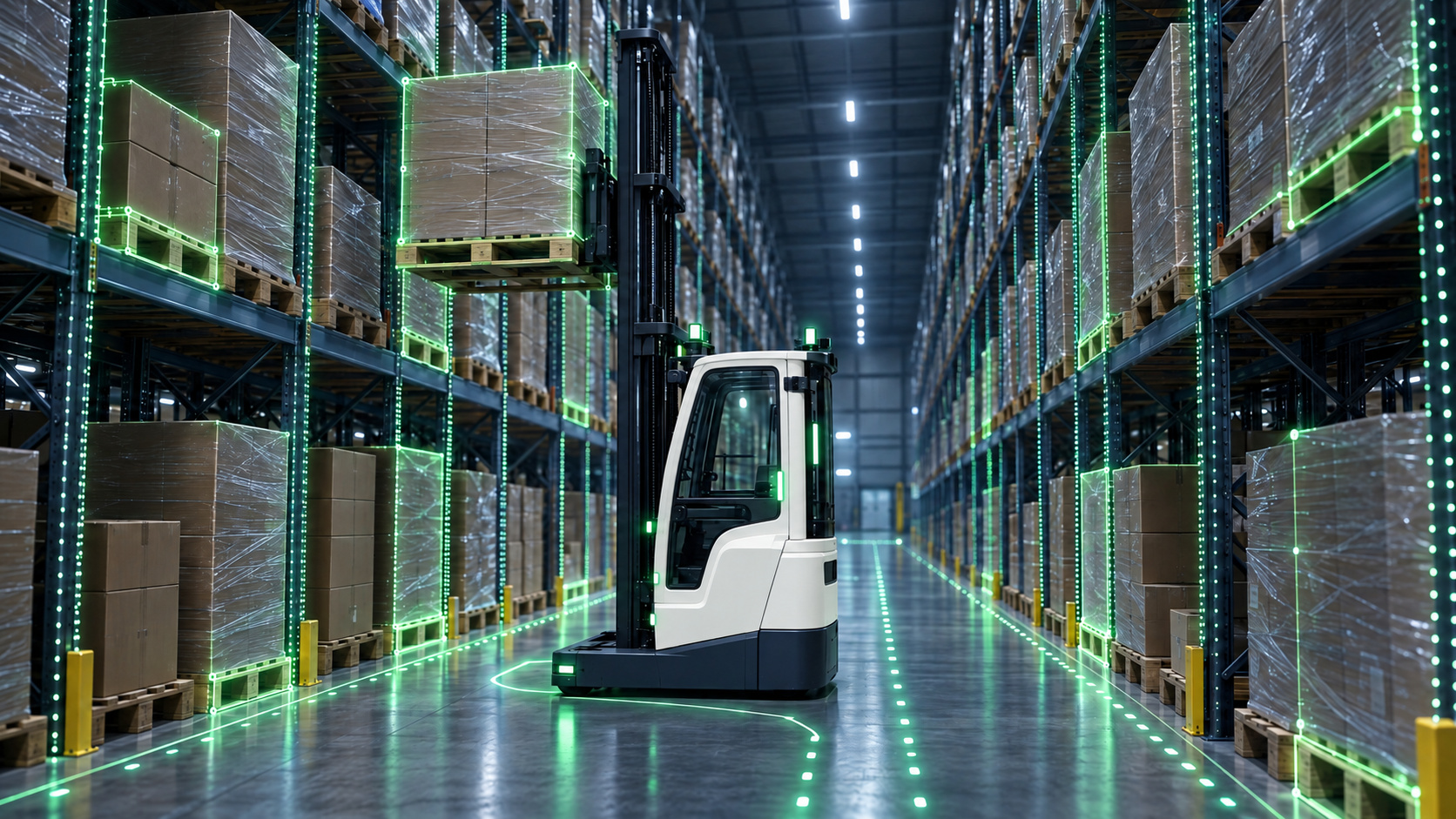
One forklift crosses the warehouse. Another works the rack. Warehouse.Plus chooses every slot and brings the pallet out when it is needed.
Nobody searches for a location, memorizes a route, or drives the tall aisle.
Pass it over. The slot is chosen. It comes back out.
The travel forklift leaves the pallet at the exchange point.
From there, the rack forklift stores the pallet and brings it back out.
WMS and AI choose from open locations, the goods, and how often they move.
Outbound runs the exchange in reverse. The travel forklift crosses the warehouse again.
Physical AI
A forklift only needs to drive and lift. Warehouse.Plus watches the building and chooses the next move.
Goods, open space, and traffic in the warehouse, all at once.
Every code becomes a place the pallet should go.
The forklift and the route are chosen together.
Each finished trip improves the next one.
It knows where it is, reads the aisle, avoids what is in the way, and sets the pallet down accurately.
Jobs go to forklifts that are free. Routes, crossings, exchanges, and charging follow work that has not happened yet.
Warehouse task context and equipment history can inform reviews of storage, flow, and capacity. Interfaces are scoped to the operation.
Warehouse task context and equipment reports inform movement, storage, and charging requirements.
The WMS provides the warehouse task context.
Goods are matched to a destination in the warehouse.
It is sent out on a clear route.
Status updates, and that trip informs the next one.
One system to answer for
No forklift left without a task, and no second software project beside it. WMS, RCS, charging, and the trucks run as one warehouse.
Travel across the warehouse and work in the high rack. The trucks stay simple. Warehouse.Plus keeps the plan.
What the goods are, where they should go, and what is on hand. Inside Warehouse.Plus, each pallet becomes a destination and a slot.
Traffic, dispatch, and a safe exchange. It chooses the forklift, the path, and where the pallet changes hands.
Charging follows the warehouse schedule, so the trucks are ready for the next wave.
Forklifts in the warehouse
One forklift crosses the warehouse. The reach truck and the narrow-aisle truck keep the rack. Warehouse.Plus coordinates all three.
Carries standard pallets from one point to another. It reads the load and charges when the warehouse has a gap.
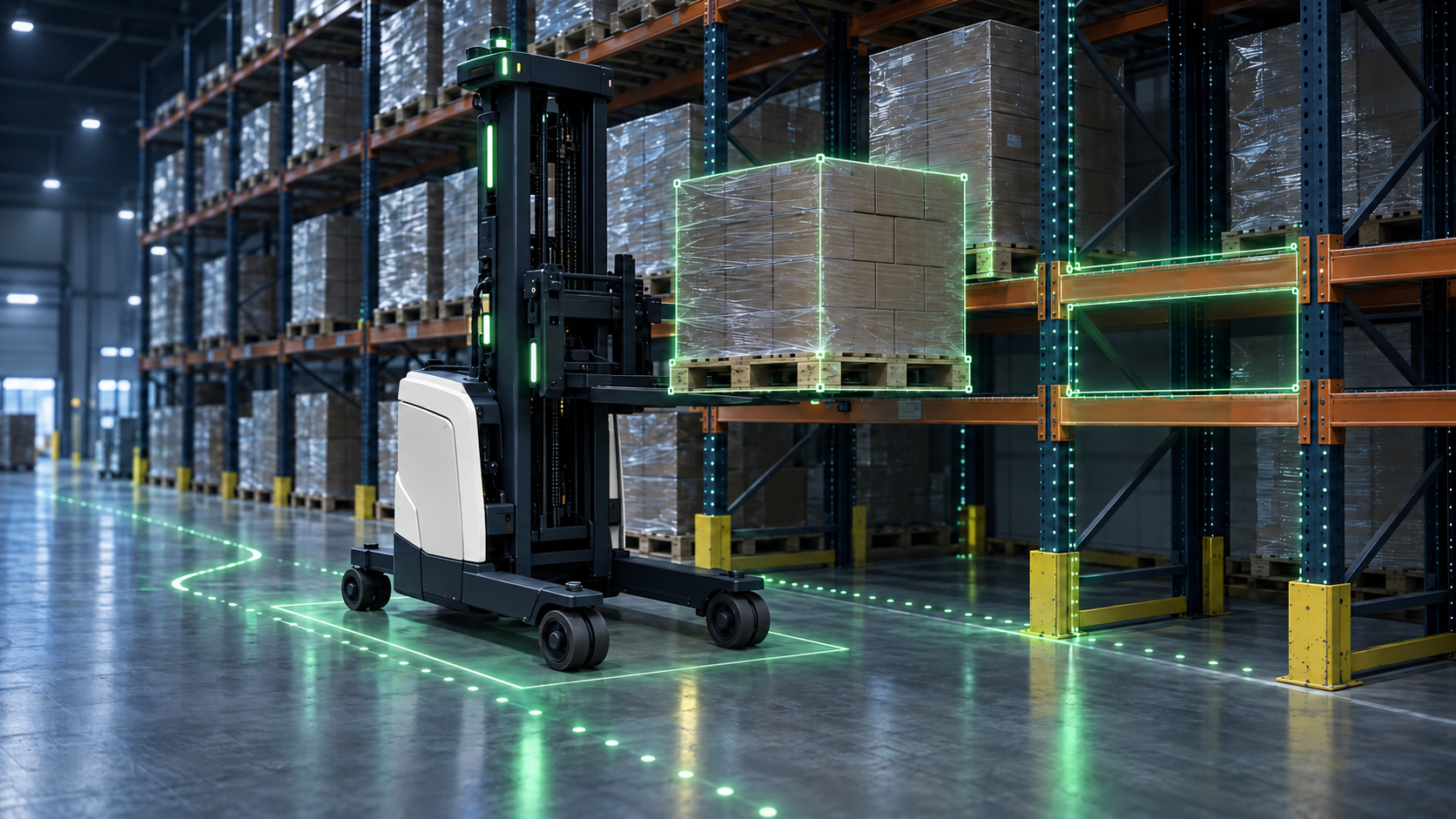
Stores and retrieves at mid height. It meets the travel forklift at the exchange and does not cross the warehouse.
The forks face the rack without the truck turning, so a narrow aisle can use the full height of the warehouse.
Blueprint alignment
Warehouse.Plus aligns with the NVIDIA MAIW Blueprint. Data, interfaces, and deployment requirements are assessed for each operation. Alignment is not a partnership, certification, or endorsement.
Track forklifts, AMRs and conveyors with live telemetry, maintenance schedules and utilization.
Plan tasks, waves and staffing, diagnose bottlenecks and act on KPIs in real time.
Enforce SOPs and regulations while managing incidents, checklists and proactive alerts.
Predict demand and stockout risk, then auto-generate replenishment recommendations.
OCR and extract from BOLs, invoices and receipts, indexed for instant retrieval.
Build digital twins, generate synthetic training data, and validate robot workflows before go-live.
Plan the warehouse
Start in one zone. We find what is slowing the warehouse down, put the full system in place, and check the return before it goes live.
Request a demo